

“AI is too important not to regulate—and too important not to regulate well,” asserts Google, capturing the sentiment resonating across the global tech landscape. Indeed, the regulation of Artificial...

Compliance Risk Assessments For a Dynamic Regulatory Terrain Crafting an effective compliance program is no one-size-fits-all endeavor; it involves tailoring a comprehensive strategy that addresses your company’s unique needs...

As remote work extends its footprint through technologies like virtual private networks (VPNs), virtual desktops, and mobile devices, the ease of accessibility these technologies provide opens the door to...

In the digital era, cloud computing has become synonymous with agility and scalability for businesses and individuals. However, critical security risks and threats inherent in cloud environments come alongside...

Data breaches have become an unfortunate reality in today’s digital landscape, affecting organizations of all sizes. In the aftermath of a third-party data breach, organizations, especially small and medium-sized...

The distinction between enterprise risk management (ERM) and traditional risk management is more than semantics. The simplest way to explain their core differences is that traditional risk management operates...
Categorizing risks as high, medium, or low has been the go-to method for organizations seeking to prioritize their cybersecurity efforts. However, the ambiguity surrounding these classifications often leads to...

In a landmark decision on July 26, 2023, the Securities and Exchange Commission (SEC) brought about a seismic shift in corporate disclosure regulations. With a slim 3-to-2 majority vote,...

Imagine your digital environment as a bustling metropolis, with every user, application, and system contributing to the constant flow of data and activities. In the sprawling expanse of our...

2023 marked a surge in comprehensive state data privacy laws. At the beginning of the year, only five states—California, Colorado, Virginia, Utah, and Connecticut—had comprehensive data privacy legislation. By...

Many organizations tend to adopt a reactive approach to managing risks. They often wait until a high-profile event, a significant news story, or regulatory changes demand a reassessment of...

Ignorance can be costly when safeguarding your cloud or hybrid networks. Today’s security teams face the challenge of monitoring the well-being and performance of a diverse array of on-premises...

Understanding Zero Trust Traditionally, cybersecurity operated on a simple principle: trust what’s inside, be wary of what’s outside. This model assumed that once someone or something gained access to...

The dynamic security landscape presents significant challenges for organizations, especially in multi-cloud environments. The key to combating these growing threats is network security automation. Alongside the consolidation of cybersecurity...
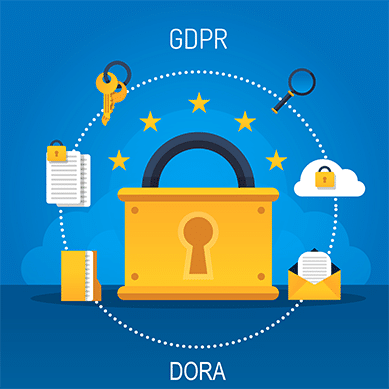
What is DORA? DORA, or the Digital Operational Resilience Act, marks a significant development in EU financial regulation. Published in the Official Journal of the European Union on December...

What is DORA (Digital Operational Resilience Act)? DORA is a groundbreaking EU regulation designed to enhance the operational resilience of the financial sector. It aims to tackle the challenges...

There’s an old saying — an ounce of prevention is worth a pound of cure. Nowhere does this hold truer than in cybersecurity. Passive, reactive cyber defenses have long...

Whether you are an SMB looking for advice as to where to start with security vulnerability management or an IT professional looking to develop and mature your security programs,...

In the aftermath of the national reckoning on racial justice ignited by the tragic events involving George Floyd, it became evident that despite good intentions, the cybersecurity sector had...

At the heart of every organization’s pursuit of compliance lies the critical need to meet regulatory expectations and consistently maintain that state of compliance. Achieving compliance is like reaching...

According to Fitch Ratings, cyber insurance is the fastest-growing type of insurance in the United States. This growth is fueled by a significant rise in cyber incidents, especially ransomware...

ESG Disclosures According to the annual survey of sustainability professionals conducted by WSJ Pro in the spring of 2023, nearly 66% of respondents indicated that their respective companies disclosed...

To assist healthcare organizations, both large and small, in achieving and maintaining HIPAA compliance, the U.S. Department of Health and Human Services (HHS) Office for Civil Rights has outlined...

The SEC’s cybersecurity disclosure rules, adopted July 26, 2023 (Release No. 33-11216), have ushered in a wave of concerns and challenges, particularly for CISOs. The rule mandates that companies...

While both HITRUST and HIPAA have substantial relevance in ensuring data security in the healthcare sector, they are very different standards. HIPAA, or the Health Insurance Portability and Accountability...
To build a robust information security strategy, one must understand and apply the core principles of information security. This blog post will delve into the fundamental principles underpinning effective...

Our clients often ask, “What is the difference between vulnerability scanning and penetration testing?” It’s a question that deserves attention, not only because of its frequency but also due...

What are Cyber Risk Assessments? Risk assessments are a fundamental part of effective risk management and facilitate decision-making. They are used to identify, estimate, and prioritize risk to business...

What is A KPI? Simply put, a KPI is a measurement to evaluate the effectiveness of individuals, teams, or entire companies. These metrics provide insights to management about the...

What are Internal Controls? Internal controls can be understood with 4 words that start with the letter ‘P’. They are the protocols, policies, processes, and practices established within an...