
Key Takeaways
- Learn what SOC 2 audit training covers and why it matters.
- Understand who needs it and how it fits into your compliance process.
- Get practical tips on scoping, evidence collection, and audit prep.
- Find out how training reduces stress and speeds up audits.
- See why SOC 2 isn’t just for compliance teams anymore.
- Explore how automation tools and SOC 2 compliance training work together.
What is SOC 2 Audit Training?
SOC 2 audit training refers to structured education and skills development programs that prepare professionals to understand, participate in, or lead a SOC 2 audit process. It is not a certification in itself, but rather a way to build the competence needed to engage confidently with SOC 2 requirements, whether as an internal team member, external consultant, or auditor-in-training. This training covers the foundational elements of the SOC 2 framework, including the five Trust Services Criteria, evidence collection strategies, audit timelines, and readiness best practices.
The goal of SOC 2 audit training is to make the audit process more efficient and successful by equipping people with knowledge of what the framework requires, how audits are conducted, and how to interpret auditor expectations. In today’s landscape of escalating data privacy risks and evolving compliance mandates, this kind of training has become an essential building block for any company pursuing SOC 2 compliance.

Why SOC 2 Training Has Become Essential
SOC 2 is one of the most widely recognized security and privacy compliance standards in the United States, particularly for SaaS providers and technology vendors. It is based on criteria developed by the American Institute of Certified Public Accountants (AICPA) and is intended to assess how service organizations manage data in a secure and trustworthy way.
SOC 2 is not a one-size-fits-all framework. It allows organizations to tailor their controls to meet the specific needs of their environment, which makes it flexible but also potentially confusing. The open-ended nature of SOC 2 is exactly why audit training has become so important. Unlike rigid standards where a checklist might suffice, SOC 2 requires interpretation, judgment, and a deep understanding of what counts as “reasonable assurance” in the eyes of the auditor.
SOC 2 compliance training preparation fills this gap. It gives professionals a practical understanding of what auditors are looking for, how to build defensible controls, and how to document processes in a way that stands up to scrutiny. The training often walks through the differences between SOC 2 Type 1 and Type 2 audits, helps participants scope their environment appropriately, and shows how to avoid common pitfalls during the evidence gathering phase.
Organizations that go through SOC 2 audit training often report fewer surprises during the audit, faster time to completion, and better communication between internal teams and external auditors. The training also helps teams align more effectively with the business goals behind pursuing a SOC 2 report in the first place, such as accelerating enterprise sales, meeting customer security questionnaires, or preparing for larger regulatory compliance goals.
Who Provides SOC 2 Audit Training, and Who Should Attend?
SOC 2 audit training is offered by a mix of professional training organizations, compliance software vendors, CPA firms, and specialized consultants. Some training is designed for internal compliance or risk management teams, while other programs target external consultants and aspiring SOC 2 auditors. The format can vary from live workshops and webinars to on-demand e-learning modules and one-on-one coaching sessions.
Participants usually include:
- Compliance officers and GRC managers who are responsible for implementing the controls and overseeing the audit.
- Security and IT teams who are directly responsible for executing technical safeguards.
- Internal auditors or consultants who want to build a repeatable SOC 2 readiness practice.
- Founders and executives of technology companies who need to understand the audit process to support sales and strategic planning.
- Customer-facing roles, such as solutions engineers or sales leaders, who want to confidently communicate about SOC 2 readiness with clients.
If you’re implementing SOC 2 in parallel with other frameworks like ISO 27001 or NIST CSF, choosing the right training can also streamline your overall compliance roadmap.
What SOC 2 Audit Training Typically Covers
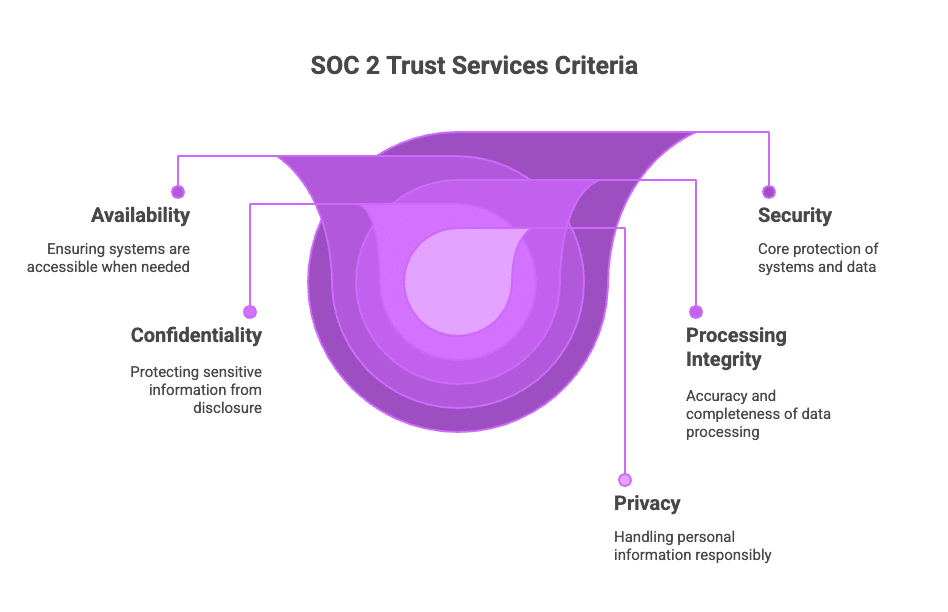
Most SOC 2 audit training programs walk participants through both the theory and practical application of the Trust Services Criteria, which include:
- Security (required)
- Availability
- Processing Integrity
- Confidentiality
- Privacy
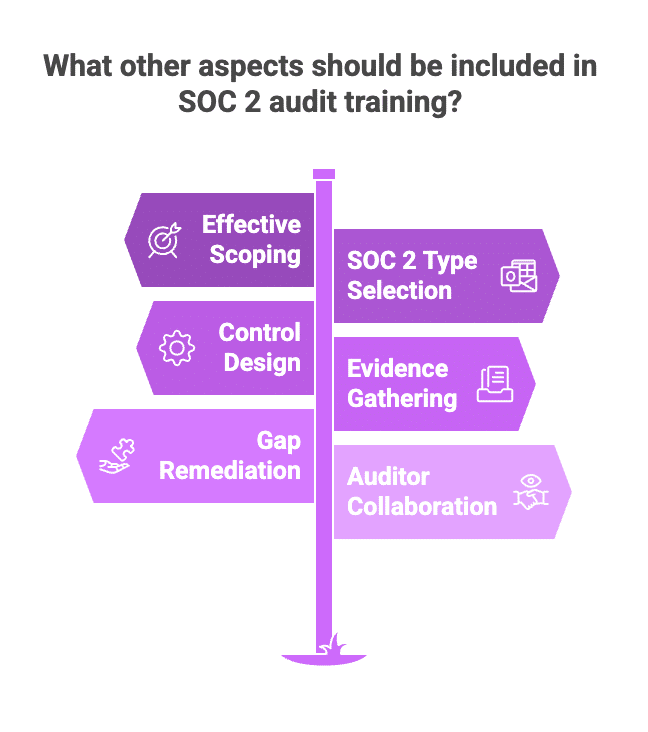
Beyond the criteria themselves, training often includes:
- How to scope your audit effectively
- Selecting between SOC 2 Type 1 and Type 2
- Control design and control mapping
- Evidence gathering, documentation, and validation
- Common gaps and how to remediate them
- How to work with your auditor and what to expect in terms of timelines and deliverables
In some cases, training will also cover the use of automation tools, such as risk and control libraries, dynamic audit workflows, or platforms that support SOC 2 readiness and submission. These tools are becoming more common across compliance programs, and knowing how to use them properly can save a significant amount of time and cost.
To streamline evidence collection, many organizations rely on an automated risk register that aligns with audit controls and simplifies cross-mapping across frameworks.
Conclusion: Investing in Competence
Organizations that invest in SOC 2 training position themselves to use the process as a foundation for continuous improvement. With the right approach, audit training can help unify teams around common goals, reduce audit fatigue, and create a culture of security that lasts long after the report is issued.
To take the next step in your SOC 2 journey, explore how Centraleyes can accelerate your SOC 2 readiness and simplify the entire audit lifecycle from control selection to final attestation.
FAQs
1. Do I need to complete SOC 2 audit training to pass an audit?
No, training is not mandatory for passing a SOC 2 audit. However, it greatly improves your team’s preparedness, reduces misunderstandings with auditors, and can help avoid delays caused by missing or misaligned evidence.
2. Is there an official SOC 2 auditor certification from the AICPA?
The AICPA does not offer a formal certification path for SOC 2 training. Most training is delivered by compliance platforms, CPA firms, or private education providers.
3. How long does it take to become “audit ready” after completing SOC 2 training?
That depends on the maturity of your existing controls and documentation. For some, it could be a few weeks. For others, it may take several months of remediation and alignment.
4. Can I combine SOC 2 audit training with other frameworks like ISO 27001 or NIST CSF?
Yes. Many training programs now address multiple frameworks, especially if your organization is planning for broader compliance efforts or uses an integrated platform like Centraleyes.
5. What’s the best way to start if our company is new to compliance?
Start small: identify one or two people to go through a foundational training course, then build internal documentation and policies around what you learn. Consider pairing training with a compliance automation tool to guide your implementation.