
Key Takeaways
- SOC 2 change management is about proving you can handle change without introducing risk.
- Auditors expect documented approvals, testing, and audit trails, not just good intentions.
- Automating evidence collection and approvals reduces last-minute audit fire drills.
- Embedding controls into developer workflows keeps compliance from feeling like a side project.
- A strong change management process builds trust, resilience, and year-round audit readiness.
What is SOC 2 Change Management?
SOC 2 change management refers to the policies and procedures that ensure changes to an organization’s systems, processes, and infrastructure are made in a controlled and secure manner. SOC 2 requires structured documentation and evidence that every adjustment was properly reviewed, tested, approved, and logged. This expectation is tied to the AICPA’s Trust Services Criteria, specifically Common Criteria 8.1, which auditors use to assess whether your controls support reliable operations and secure data handling.
Change is inevitable in digital ecosystems. Code gets updated, technology advances, access permissions are adjusted as employee positions change. But in systems that handle sensitive data, these inevitable changes carry risk. That’s why SOC 2 change management requirements such a central role in demonstrating that an organization is operating with discipline, control, and foresight.
As part of a SOC 2 audit, organizations are asked to show that they aren’t making reactive, undocumented tweaks that could compromise trust. They must prove that all changes are planned, approved, tested, and traceable.
Key Elements of SOC 2 Change Management
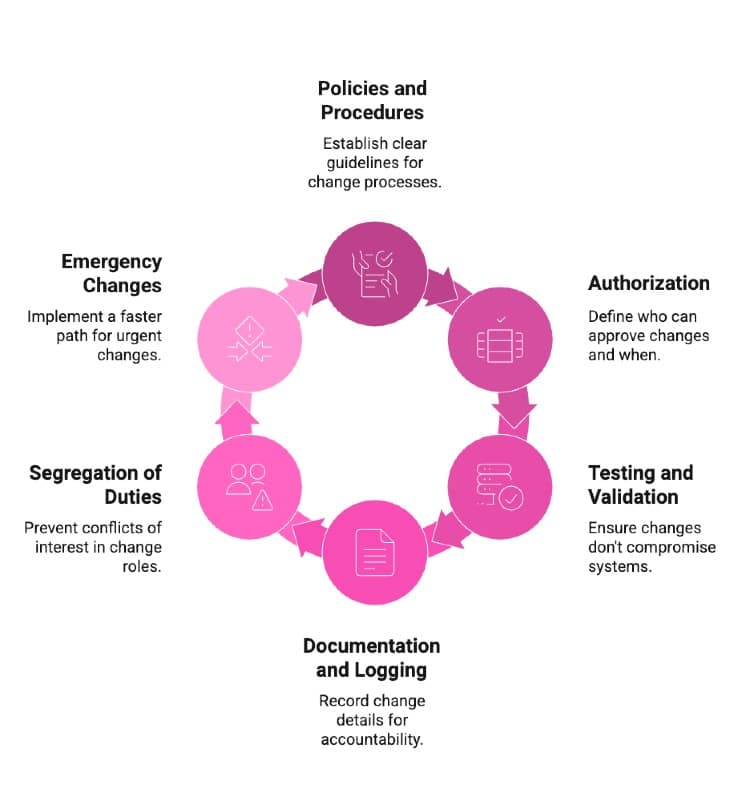
A strong SOC 2 change management program usually includes:
- Policies and Procedures: Clear documentation that sets expectations for how changes are proposed, reviewed, tested, and approved. Many organizations create a SOC 2 policy template to make sure every change request is logged with the same fields—who requested it, why it’s needed, who approved it, and how it was tested. Using a standardized template keeps documentation consistent and easier to present during an audit.
- Authorization: A defined process for who can approve changes and under what conditions.
- Testing and Validation: Measures to ensure that a change won’t break systems or compromise security. Related practices include vulnerability management.
- Documentation and Logging: Records of what was changed, by whom, when, and why.
- Segregation of Duties: Preventing the same individual from both developing and approving a change to reduce conflict of interest.
- Emergency Changes: A controlled but faster path for urgent situations like patching a critical zero-day.
How We See Teams Approach SOC 2 Change Management
In practice, organizations rarely treat SOC 2 change management as a stand-alone project. Instead, it gets woven into the daily rhythm of how engineering and security teams work. The most effective programs are those that balance speed with accountability, embedding checks into systems teams already use rather than adding layers of bureaucracy. This shift reflects a broader trend in compliance automation and risk management automation, where technology carries much of the administrative weight so people can stay focused on execution.
Here are some of the most common approaches we see:
- Infrastructure as Code: Version-controlling infrastructure so every change leaves a permanent, reviewable audit trail. This gives both engineers and auditors confidence that system modifications can be tracked and rolled back if needed.
- Automated approval gates: Building structured checks into CI/CD pipelines so risky changes are flagged automatically, without slowing down safe, routine deployments.
- Centralized evidence collection: Using audit documentation tools and automated logging so approvals, test results, and change histories are ready when needed, rather than scattered across emails or screenshots.
Where Change Management Connects to Risk
Change management isn’t just about keeping auditors happy. It plays directly into an organization’s ability to manage risk. Poorly documented changes are often the root cause of security misconfigurations, downtime incidents, and data leaks.
That’s why effective programs tie change management into the risk register. When a change introduces a new vulnerability or reduces an existing one, it is captured as part of the broader risk picture. This shows auditors that risks are being tracked and addressed proactively.
What Auditors Look For
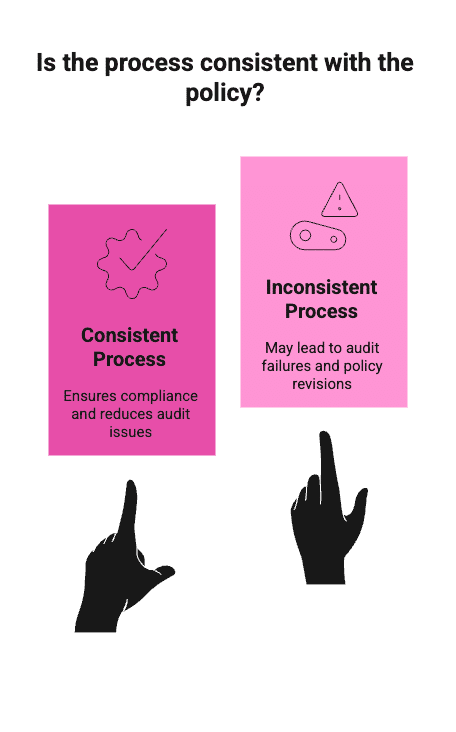
When it comes time for a SOC 2 audit, the key question is whether your process is consistent. If your policy says all production changes require approval, auditors expect to see that approval in place every time. Gaps in evidence are usually a bigger issue than the details of the policy itself.
Auditors will typically review:
- Your documented SOC 2 change management policy
- A sample of change requests, approvals, and test records
- Logs showing when and how changes were deployed
- Evidence that emergency changes were tracked afterward
For organizations preparing for a SOC 2 Type 2 report, it’s important to understand that auditors will want hard evidence in the form of change tickets, approval logs, testing records, and system audit trails. If those records don’t exist, the result is usually findings that delay certification.
This is why many organizations align their change management efforts with broader audit management processes. Instead of treating it as an afterthought, it becomes a living control area that ties directly into policies, risk assessments, and compliance reporting.
In the bigger picture, the best approach is to view change management as part of the bigger picture of information security governance. By embedding controls into workflows, documenting consistently, and linking changes to your risk and compliance frameworks, you not only meet the standard but also build stronger, more resilient operations.
FAQs on SOC 2 Change Management
1. Do auditors look for specific tools during SOC 2 change management reviews?
No, auditors don’t require particular software. What matters is that your chosen tools support authorization, tracking, documentation, and testing in a consistent way.
2. How detailed should change documentation be for SOC 2?
Enough to clearly show what was changed, who approved it, who carried it out, and how it was tested. Over-documenting is less of a concern than missing critical details auditors need.
3. What happens if an emergency change skips the normal approval process
It won’t automatically fail your audit, but you’ll need evidence of how the change was logged, tested afterward, and reviewed in a follow-up process.
4. How often should change management policies themselves be reviewed?
At least annually. Many organizations review them more often to keep pace with new technologies and evolving risks.
5. Does change management only apply to code changes?
No. SOC 2 applies to any system change that could impact security, availability, or privacy.